ARIA-88
Autonomous Robotic Instrumental Apparatus

ARIA-88

A voice-controlled acoustic piano

You ask. The piano plays.

Name a song, describe a mood, or hum a half-remembered melody. ARIA-88 turns your request into a live performance on a real upright piano — 88 mechanical fingers pressing the same wooden keys a pianist would.

88 keys. 88 mechanical fingers. No pianist required.

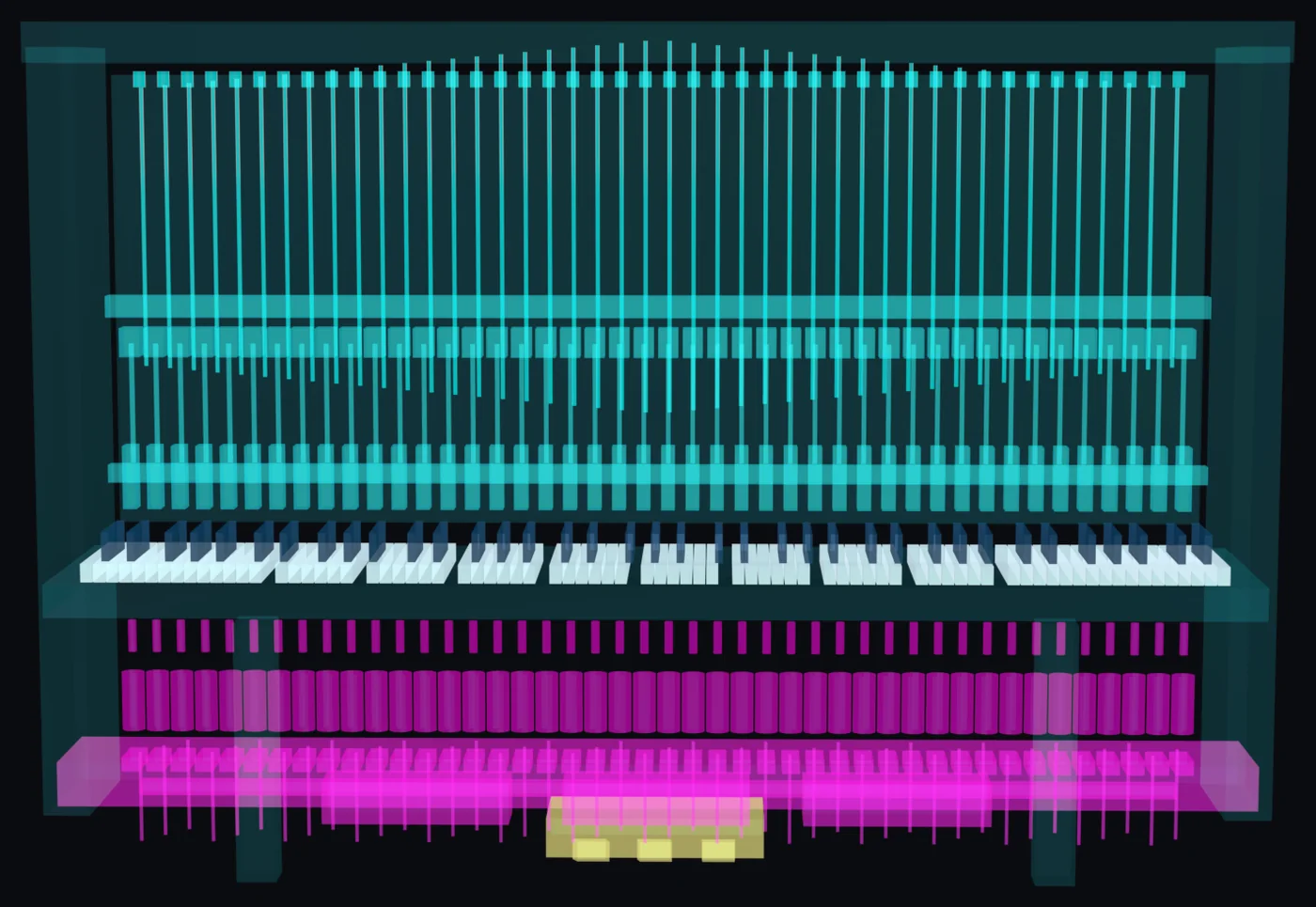
Holographic cutaway render of ARIA-88: a transparent upright piano showing its strings and tuning pins, the hammer action, the full 88-note keyboard, and the magenta solenoid rail with its coils, plungers and data wiring beneath the keybed. When motion is enabled it plays a phrase: solenoids push the keys, the action levers throw the hammers at the strings, and everything returns.
Design render · 88 keys, 44 sampled actions, 44 solenoids · motion exaggerated · not yet built
88
Keys actuated
96
Driver channels
69
Design checks run
0
Solenoids bought
How it works

Say the song. Watch 88 keys bring it to life.

Five stages, in order. None of it is a metaphor — every stage is a real piece of hardware with its own failure mode.

1

Hear the request

ARIA listens for a song, a mood, a style or a melody — asked the way you would ask a person, from across a room.

2

Find the music

She works out what was actually asked for, and prepares something the piano can perform.

3

Shape the performance

Notes, dynamics, timing and sustain become a complete arrangement across the full 88-key range.

4

Command every key

The control system coordinates every strike to the millisecond. Pulse duration is what sets how hard each hammer lands.

5

Play it for real

Mechanical fingers move the piano’s own keys, hammers and strings. The instrument stays entirely acoustic.

Why build it

Recorded music plays through a speaker. ARIA-88 performs in the room.

Every note is made of string, hammer, wood, felt and air, with all the resonance and imperfection that implies. Nothing is sampled, and nothing is played back.

And the way in is just talking. No menus, no keyboard, no musical training. Walk up and ask.

Music you can feel happening

Hammers strike real strings a few feet away. You hear the wood, the felt and the room — not a recording of them.

A machine built to perform

Robotics, embedded control, power electronics, fabrication, acoustics and machine intelligence, all forced to agree with each other.

One piano. Endless possibilities.

Once the instrument exists, others can build performance modes, characters, games and installations on top of it.

What makes it difficult

Making a piano play itself is one thing. Making it play beautifully is the real work.

These are measured or computed figures from the current design, not estimates. Several are the reason the project has not ordered parts yet.

750 mA
Per coil, measured

The solenoid is rated 400 mA and actually draws 750. Thirty at once is 22.5 A — which is what sizes the whole power system.

432 W
Heat, worst case

Holding a 24-note chord at full duty would dump 432 W inside a wooden case. Hold power has to come down to about 130 W.

±10 ms
Chord alignment

Notes in a chord must land together or it arpeggiates itself. 4.7 ms of the budget is the coil's own rise time, which no amount of clever scheduling removes.

10 s
Thermal cap per note

A coil becomes unsafe at about 40 seconds. Firmware force-releases any note held past ten, no matter what the music says.

Where it stands

The blueprint is finished. Now she needs a piano.

The electrical architecture, mechanical design, bill of materials, safety rules and staged build plan are complete and have been stress-tested on paper — 69 automated checks across the hardware, the software and the plan's own internal consistency. Four of them still fail, and they are published rather than hidden.

The next gate is physical: put a handful of solenoids against a real piano action and measure what they actually do. Everything downstream depends on that measurement.

DesignSchematics, BOM, safety layer, CAD, stress tests CompleteDone
M0Prove one solenoid plays one key — force, travel, timing, noise, hammer velocity Next gateWeek 1
M1One electronic channel end to end; flyback scoped, 10k cyclesWeek 1–2
M2A 16-note section — chords, heat, power behaviour, firmware timingWeek 3–4
M3All 96 channels on the bench, with fusing, E-stop and the safety layerWeek 5–6
M4Mechanical integration — 88 individual adjustments. The real risk.Week 6–9
M5Velocity calibration across all 88 notesWeek 9–10
M6Voice, language and arrangement pipeline (runs in parallel)Week 2–10
M7–M9Soak testing, hardening, and a first public installationWeek 11+
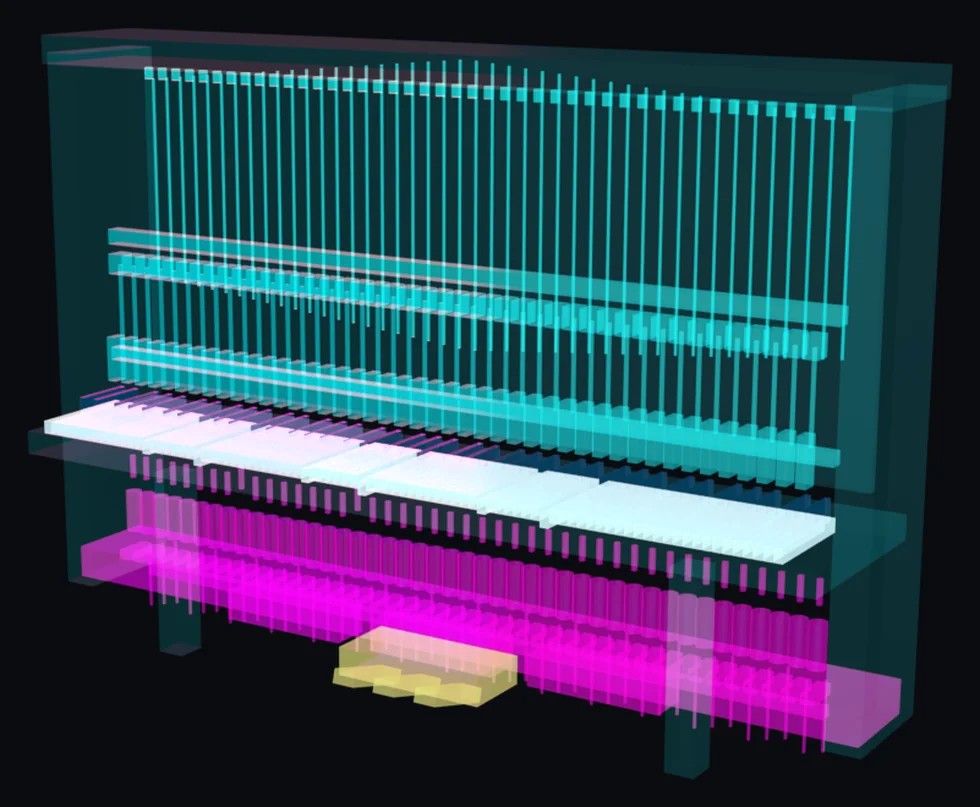
Front elevation render of ARIA-88: the strings and tuning pins across the top, the sampled hammer action beneath them, the full 88-note keyboard, and the magenta bank of 44 solenoid coils and plungers below the keybed.
Front elevation · strings, action, keyboard, solenoid bank
Inside the instrument

88 mechanical fingers. One very real instrument.

Six 16-channel driver boards, logic-level MOSFETs, protected 24-volt distribution, real-time scheduling on a Teensy 4.1, and a separate computer for speech and musical reasoning. Per-coil flyback protection, current limits, fusing, thermal rules and a physical emergency stop.

The full build manual — schematics, action mechanics, budget, firmware model and every stress-test result — is public.

How to help

Help turn the blueprint into its first performance.

Every figure below is a real line from the project's bill of materials, priced in August 2026. Funding any one of them moves a specific gate.

$288

The solenoids

Ninety-six actuators — the mechanical fingers. The single largest electronic line, and what M0 must validate first.

Allowance · 96 ch
$200

A piano

A used upright in playable condition. Donating an instrument removes this line entirely and is the most valuable single contribution.

Allowance
$175

The brain

A single-board computer to run speech recognition, musical reasoning and arrangement locally.

Quoted 21 Aug 2026
$166

Power & protection

The 24-volt supply, fusing, flyback protection and terminations that keep 22 amps safely inside a wooden box.

Quoted + allowance

Bring more than money

The first performance starts here

Help ARIA-88 play her first note.

ARIA-88 has a finished blueprint and a public engineering plan — including the parts of it that do not yet work. What she needs now is a piano, a workbench, and the parts that turn the design into a live performance.